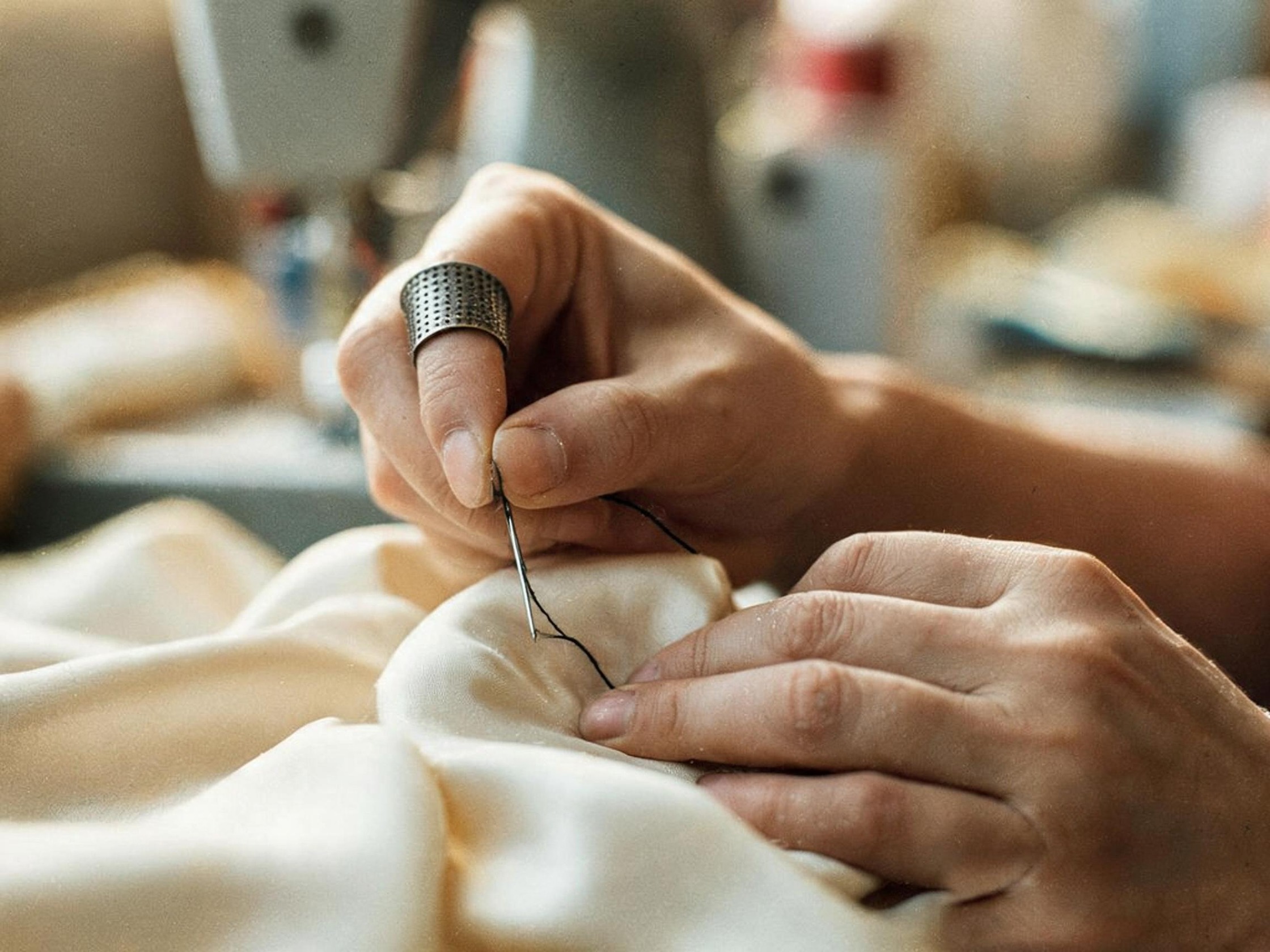
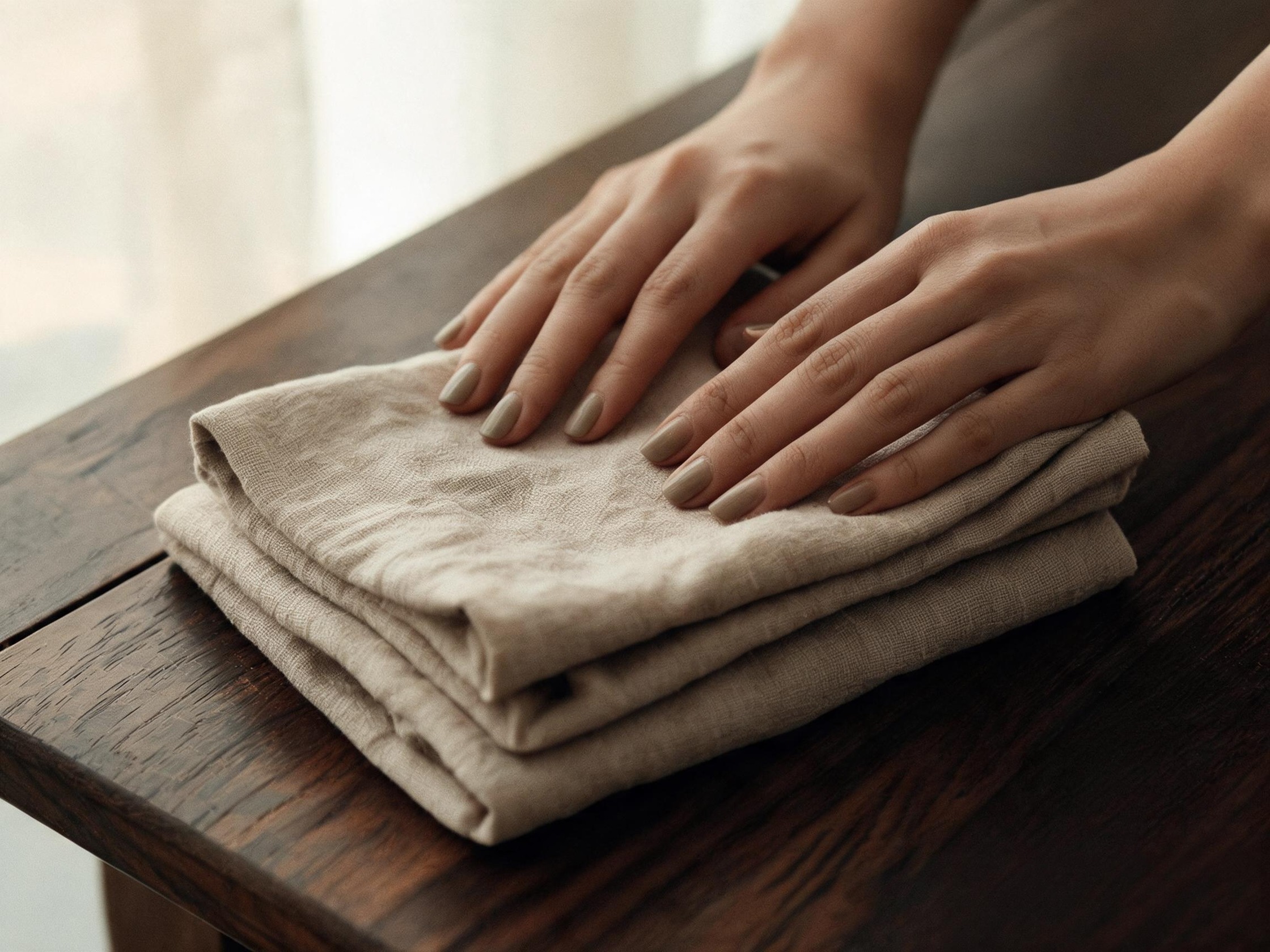
Linen arrives tightly woven, slightly stiff, and full of intention. If you cut it immediately, the garment will change shape after its first wash. So we do not cut it immediately.
Wash, rest, repeat
Our linen is washed three times and rested between each wash. The cloth softens, the weave opens, and the shrinkage happens before the pattern is placed. It is a slow step that cannot be rushed, and it is the reason a Veloura linen dress still hangs correctly after a summer of wear.
What to look for in a finished piece
- A hem that falls straight after washing, not before
- Seams that lie flat without pressing
- A shoulder that keeps its line after a day of wear
None of this is visible in a photograph. All of it is felt when the garment is worn. It is also why we keep a small stock of each cloth — so a piece can be remade or repaired years later from the same weave.
“Cloth has a memory. Our job is to let it settle before we ask anything of it.”